<linearGradient id="sl-pl-stream-svg-grad01" linear-gradient(90deg, #ff8c59, #ffb37f 24%, #a3bf5f 49%, #7ca63a 75%, #527f32)
0%
Loading ...
TEM

How AI Technology Is Simplifying and Accelerating Expense Management

What if the next time an analyst opened a telecom invoice, they didn’t have to start from scratch? 

No searching through multiple files. No manually copying hundreds of line items. No spending hours comparing charges just to find the few that actually need attention. 

That is the opportunity AI brings to Telecom Expense Management. 

As a Senior Manager in the TEM delivery team, I see firsthand how much of our work involves processing large amounts of data—downloading invoices, extracting information, building inventories, validating charges, and investigating exceptions. Much of this work is essential, but also repetitive. 

The opportunity is not about replacing our analysts. It is about giving them a smarter starting point. 


From Manual Work to Intelligent Assistance 

AI-assisted document processing can help extract information from structured invoices as well as scanned documents, organize it into the required format, and support faster inventory creation. 

Instead of spending most of their time on data entry and routine checks, analysts can focus on validating results, investigating exceptions, and making decisions. 

Where We Can Create Real Value 

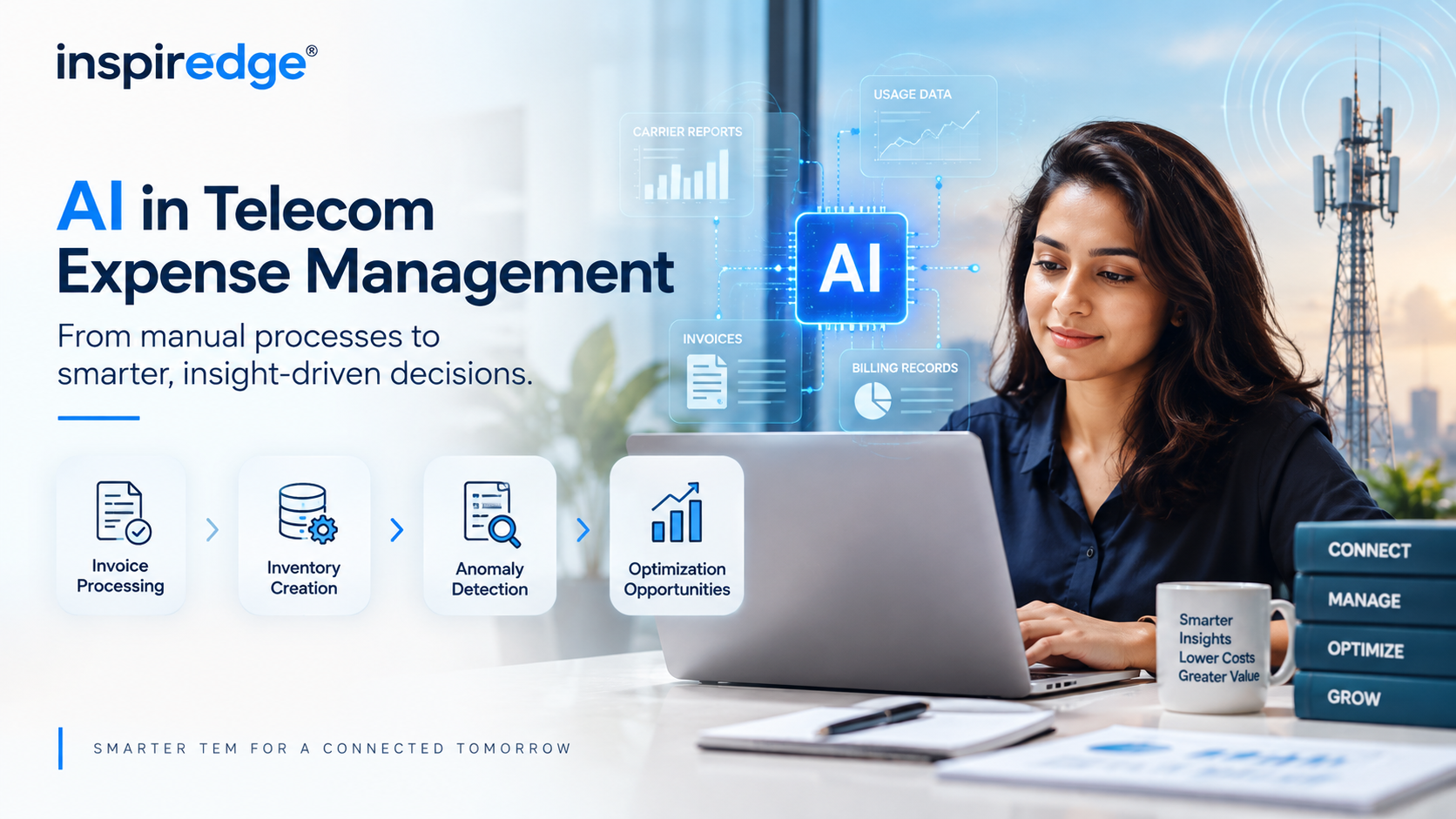
Invoice processing and inventory creation are two areas where AI and automation can make an immediate, practical difference. Information from invoices, carrier reports, portals, and existing records can be brought together to create a more complete view of the telecom environment. 

Audit and anomaly detection is another opportunity. AI can be trained to recognize unusual billing patterns, duplicate charges, unexpected recurring costs, or other changes that may need investigation. This allows analysts to focus their attention where it matters most. 

From Expense Management to Expense Optimization 

The opportunity goes beyond finding billing errors. We can work toward training AI to analyze wireless devices, usage patterns, plans, and historical spend to help identify underutilized devices, unusual usage, or plans that may no longer fit actual needs. 

Over time, these insights could support recommendations or automation for actions such as plan changes or device reassignment.

Making Our Teams More Effective 

For delivery teams, the biggest change is simple: less time searching through data, more time acting on it. 

 Our analysts can spend more time investigating complex exceptions, identifying savings opportunities, supporting contract reviews, and helping clients make better decisions. 

That, to me, is where the real value of AI lies. 

It is not just about doing the same work faster. It is about moving TEM from manual, reactive expense management toward a more proactive and insight-driven approach. 

When AI, automation, strong processes, and human expertise work together, we can make expense management simpler, faster, and more valuable for our clients. 

Divya

Diya Bhattacharya

Senior Manger Operations

Author

ie-sm